
You walk in to grab the dumbbells or check on the woodworking project, and there it is: rust streaks running down the inside of the garage door, a damp film on the metal, maybe a weird grinding sound when the opener kicks on. One of you says the door's fine, it's always been fine. The other says the door is exactly the problem. You're both half right, and here's why.
The door didn't sign up for this job
A standard garage door is built to be an exterior wall for a space that stays roughly the same temperature as outside — cold in winter, hot in summer, with air moving in and out every time it opens. The moment you insulate the walls and ceiling, run a space heater or window AC, and start treating the garage like a room, you've changed the conditions on one side of that door without changing the door itself. Warm, humid air inside meets a cold steel surface in winter, and you get condensation. In a Wisconsin winter with deep cold snaps, that condensation can be heavy enough to drip, pool at the bottom track, and eventually rust the hardware.
The symptoms usually show up on the door first
Before anyone notices a bigger energy bill, the garage door tends to tell on itself:
- Rust at the bottom bracket, hinges, or track from repeated condensation that never fully dries
- Weatherstripping that's gone brittle or shrunk faster than expected — doors that open less often (because the room doesn't need vehicle access anymore) don't flex the seal the way daily driving in and out does, and the rubber dries out
- A door that suddenly feels heavier or unbalanced if insulation panels were added to the door itself without rebalancing the springs for the new weight
- Opener sensor errors because a weight rack, workbench, or storage shelving ended up a few inches closer to the track or the safety sensor beam than it should be
- Fine dust buildup in the rollers and opener gears if the workshop generates sawdust or drywall dust that settles into moving parts it was never designed to tolerate
What actually needs to change — and what doesn't
This is usually where the argument gets settled, because the fix is smaller than either side assumed:
- If the room is heated or cooled, the door should be insulated too. An uninsulated steel door next to a conditioned room is the single biggest source of temperature loss and condensation in that space. Insulated door options vary widely in price, so it's worth getting a real number rather than guessing.
- Weatherstripping and the bottom seal need a fresh look, especially before winter. A door that doesn't move much still needs a seal that compresses properly, or cold air, moisture, and road salt residue tracked in from the driveway during spring thaw will find their way underneath.
- Any insulation retrofit on the door panels changes the spring tension needed. Springs are sized for the door's original weight. Add insulation panels after the fact and the door can become hard to lift by hand or strain the opener — this is a balance check, not something to guess at.
- Clearance around the track matters more once the garage is furnished. Gym equipment, tool chests, and shelving need a few extra inches of buffer from the door's moving parts and sensor line.
- Ventilation or a small dehumidifier helps more than people expect, particularly through humid Wisconsin summers when a cold door surface (from AC inside) sweats just as much as it does from heat in winter.
None of this means gutting the conversion or giving up the room. It means budgeting for the door to catch up to the job the rest of the garage is now doing.
When to call Mukwonago Garage Door
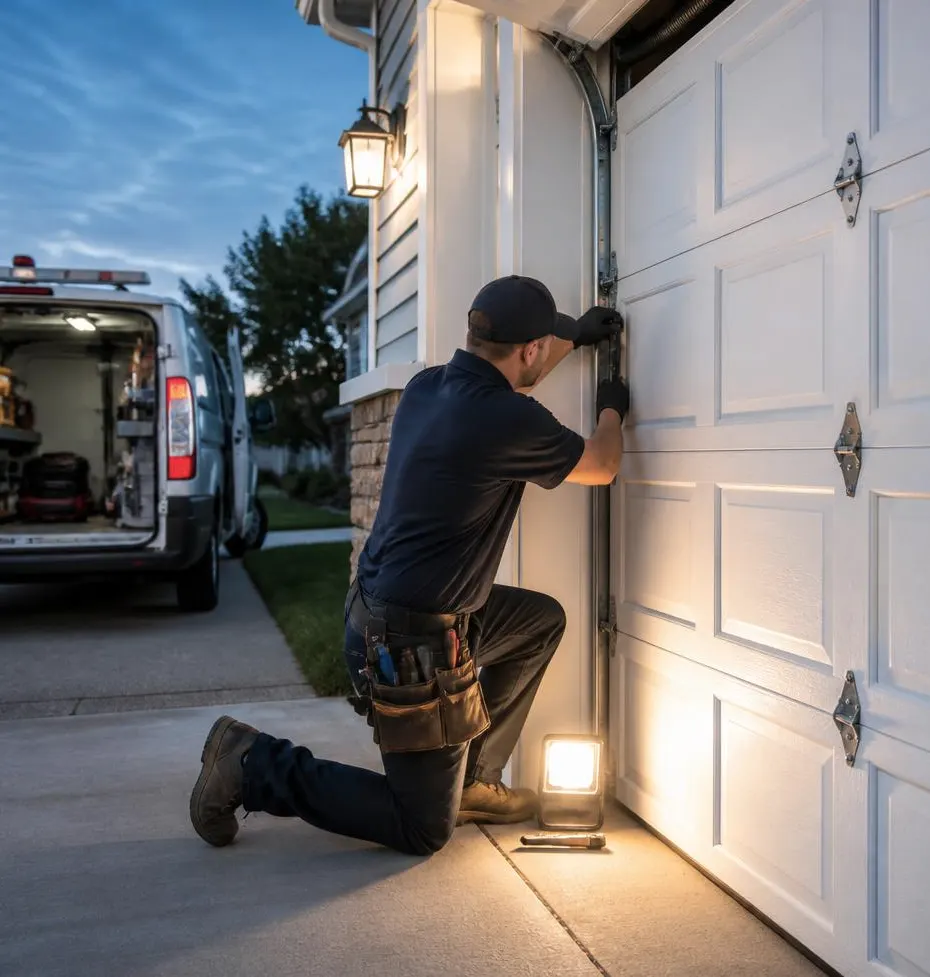
If you're seeing rust, condensation, a door that's gotten noticeably heavier, or opener sensors acting up since the conversion, it's worth a service call before those small issues turn into a stuck door or a snapped spring in the middle of a Wisconsin cold snap. We handle Garage Door Maintenance to catch seal, roller, and balance issues early, and Garage Door Installation if it's time to swap in an insulated door that actually matches how the space is being used now. If the weight has changed because panels were added, we'll also check whether Spring Replacement is overdue before it fails on its own schedule.
Whether you're in Mukwonago, East Troy, Waukesha, or anywhere nearby, give us a call and we'll figure out exactly what the converted space needs from the door — no guessing, no upsell, just a straight answer.